Wednesday, September 24, 2008

Triumphant Sun, Pt. 8

The garden had so overgrown the walls of the house that Samira could not discern whether anyone still occupied it. In truth, she could not decide if she really wanted to know. A perverse and contrary instinct pulled her to the place; now that she stood before it, regret suffused her. She let her hand fall down the gnarled iron of the gate.

As she stood, an elderly man shuffled down the street, each hand balancing a metal plate dotted with glasses of tea. He wore a long robe, the end spattered with dust and grime from the street, and his head was wrapped with a grey cloth. Deep lines carved his face, which crinked into a bemused smile when he saw her standing on the sidewalk, arm outstretched.

“Yaa basha,” she called, checking her shawl to make sure it was at a modest level around her head. “I have a question.”

“Yes, mademoiselle?” He said the French word with a rhetorical flourish; Samira felt he might have actually bowed had he not been burdened with the trays of tea.

“Who lives in this house, now?”

The man peered up at the house for a moment. “I think it is almost always empty. Sometimes there are cars, though. But I do not know who it has been in many years – not since Khaleel Rahman left.”

Samira's breath caught in her throat. “You know Khaleel Rahman?”

The man drew himself up with a dilapidated pride. “I was bawab here for 10 years.” His expression fell slightly. “But then, I joined the army.”

She tried to piece together a memory of this wizened man but could not. In her memory, the bawab had been a heavy-set, insouciant man with a deep voice and a barrel chest. No matter how many years had passed, she could not see him transformed into this diminutive figure.

“When was this?”

The man thought for a while, blinking rheumy grey eyes. “Maybe 25, 30 years ago I left? But I remember. Rahman was a great man.”

The hell he was, though Samira to herself. “Shukran, basha,” she replied out loud and inclined her head. He hefted the trays and continued down the street at the same slow, steady pace, slippered feet falling on the uneven pavement with rhythmic slaps.

Saturday, September 20, 2008

Triumphant Sun, Pt. 7

If Fuad benefited from the war, he had to be getting help from the Americans. With US troops in Afghanistan, Iraq and the Gulf, he could use a supply chain that stretched all the way across the Middle East, bypassing Afghan smugglers and Turkish drug runners. The Afghan would be able to cut costs and take advantage of military security. If he could find proof that Abdel-Kareem was mixed up with the operation, it would come together.

For a while, he stared out the tinted windows of the sedan. The city seemed impossibly remote from him, not truly there but merely projected onto the side of the car. His mind was far away, trying to trace the patterns, spiralling out from the Afghan highlands like a woven carpet. Which Americans were involved? He vaguely remembered a story about American drug runners using the coffins of slain soldiers. That didn't seem the likeliest scenario, though.

If Abdel-Kareem was involved, that meant the military would also be involved. Every year, millions of dollars in military aid flowed from the United States to Egypt. Some of that could easily be diverted to running drugs out of the remoter areas of occupied Afghanistan. Fuad wouldn't talk, obviously, but someone else in the chain might. He absentmindedly took the finger-length brick of hash and secreted it away in a pocket.

“So you do opium and guns too, Fuad?” he asked. “Maybe I need something else, I come back to you?”

Fuad gave him a searching look. “Maybe so. But guns, never. Too much risk, too little money. But for now, we have a deal?”

Evan nodded. He would have killed to have his pocket recorder with him right now. He wasn't sure yet what the significance of Fuad avoiding weapons was, but he knew it had to be there. Mentally, he filed it away for future use.

He produced a wad of a battered Egyptian pounds and thumbed through them for the least frayed bills. Money in Cairo circulated endlessly, the cheap paper steadily disintegrating further and further. More than once, Evan's payments had been rebuffed by clerks disdainful of the wretched state of his currency. He handed over the money and Fuad signalled for the driver to pull over. The car rolled to a halt before the front gate of the Nile Hilton under the bored, impassive gazes of the guards.

“This place is good for you?” asked Fuad.

“It's as good as any.”

“Ma'salaam,,” said the Afghan in a firmly dismissive tone. Obviously he didn't much trust Evan.

“Ma'salaam,” replied Evan as he stepped from the car. In front of the armed soldiers, the hashish felt heavy in his pocket. Fuad's driver pulled away from the curb in a cloud of dust and Evan looked after it as it faded into the snarls of traffic, a shimmering mirage of heat hanging over the square.

Thursday, September 18, 2008

Staying the Course

Sorry - I'm running a bit behind because I just started a new job this morning and I have a big writing project to wrap for the other one. I don't want to to rush the next installment because it's going to be important to the plot and I want it to make sense. Anyways, it should be up by the end of the week and then we'll be back on schedule.

Also, my tracker widget tells me I got a spike of viewers yesterday, which I can only attribute to the McCain post. I'm glad you enjoyed it. Tell your friends! Also, read the story. 'Cause that's why I'm here.

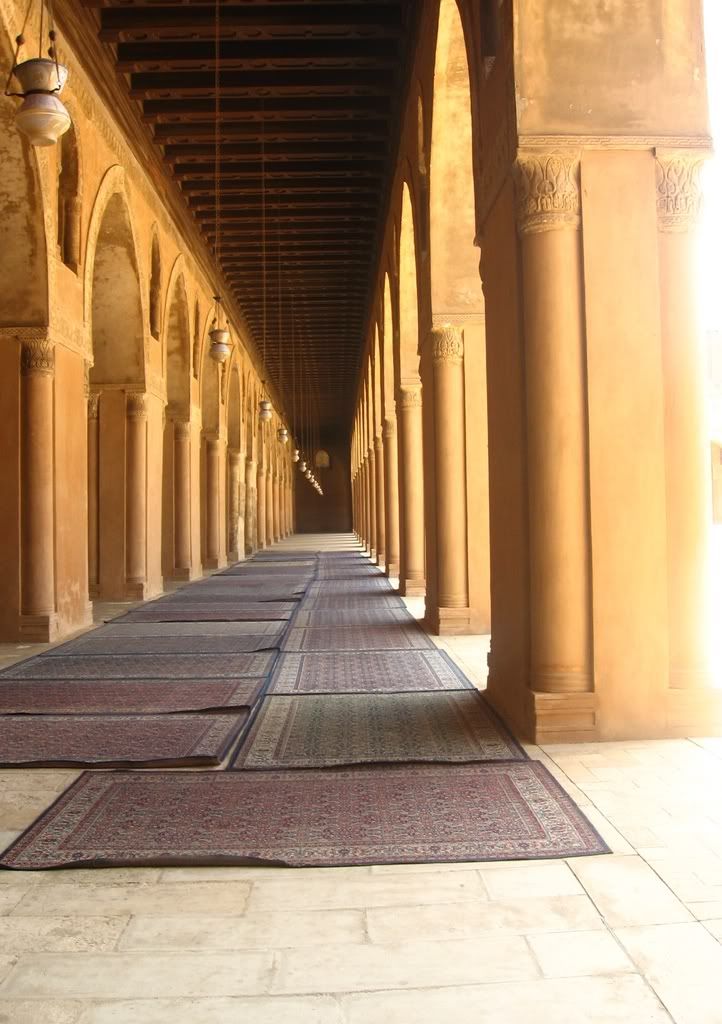
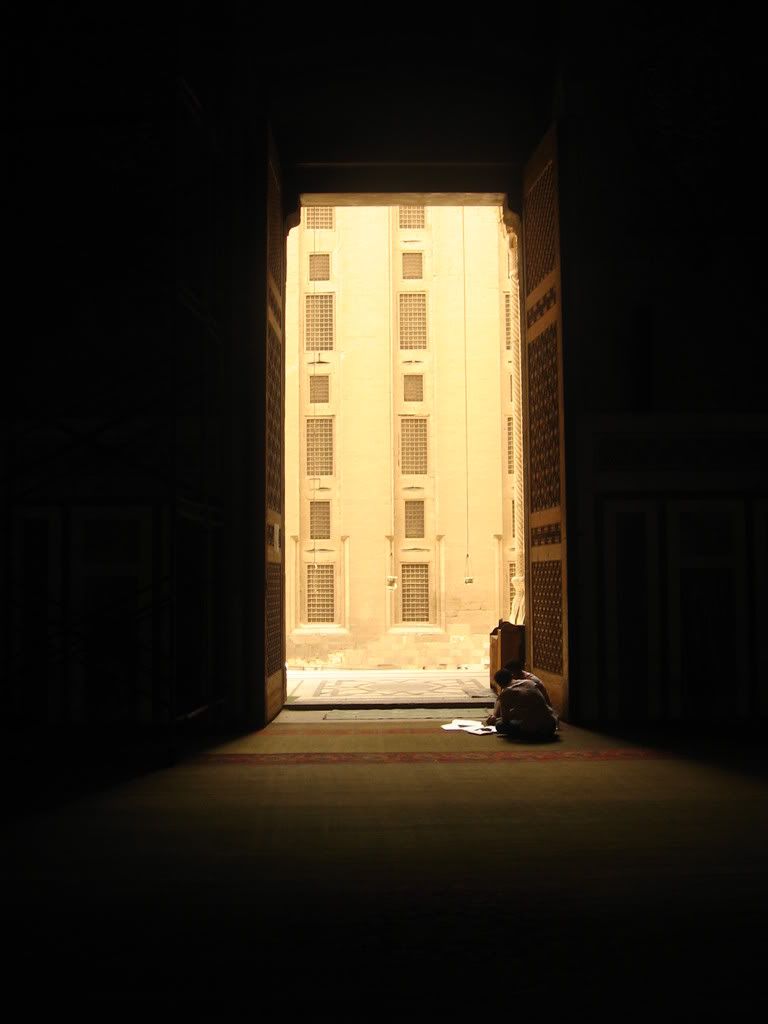
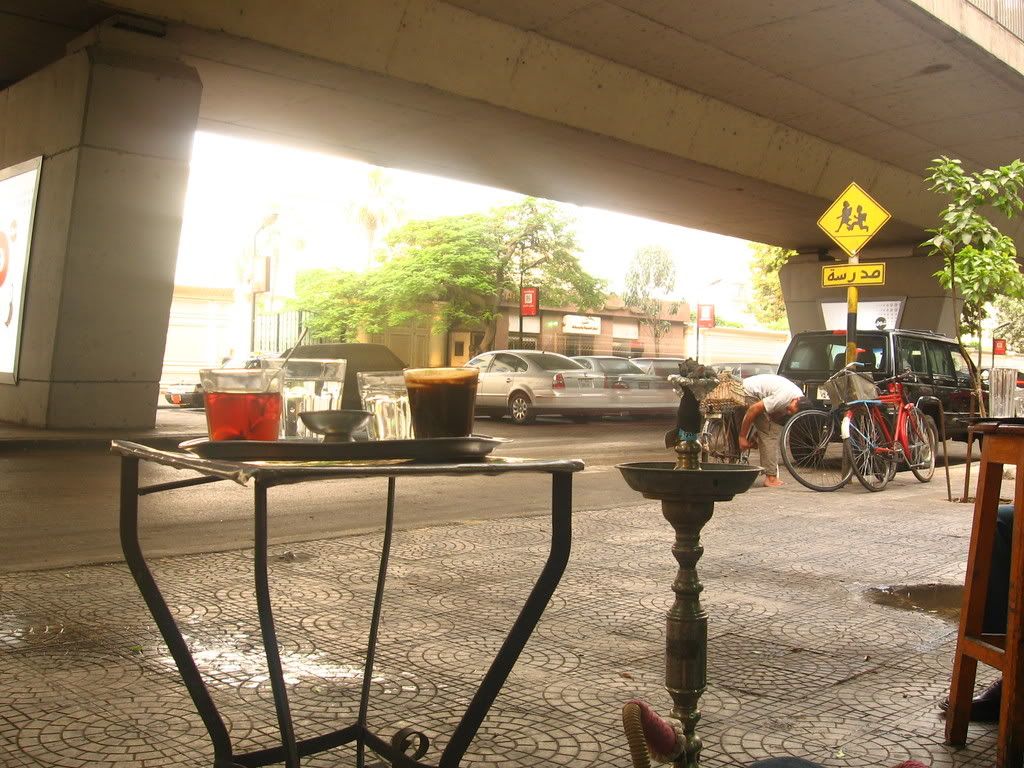
Consolation prize - some pictures of Cairo, to get you in the mood.

Tuesday, September 16, 2008

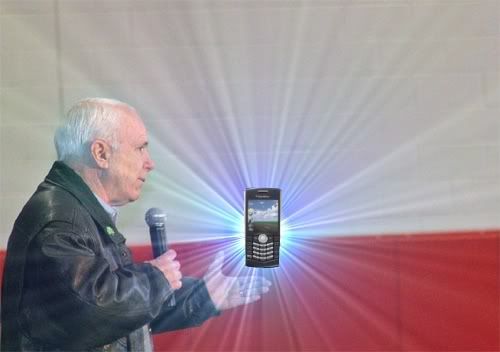
John McCain Created the Blackberry


Although Al Gore may have created the internet, John McCain has done him one better by Creating the Blackberry.

Wednesday, September 10, 2008

Triumphant Sun, Pt. 6

Evan stared at the paper before him, trying to decipher the scrawling of the last hour. He took another sip of bitter tea and forced himself to focus on the mess of names and dates that formed the bare skeleton of the story. Coherence hovered at the edges of thought, slipping away whenever he tried to fix upon it. The pieces of the affair lay before him, but he couldn't assemble them. There seemed to be no connection between the various parts – who was the Iranian, Said, for instance? What interest could he have in the scandals of an Egyptian general?

It occurred to him that Carlos might be able to help him after all. He just had to approach it from the right angle. He quickly called and watched the taxis maneuver before him as the phone rang.

“Miss me so soon?” drawled Carlos sardonically.

“Yeah, yeah. Funny. Look, you have Fuad's number?”

“Fuad, like Fuad al-Afghani?”

“Yeah, that one.”

“Well, I got his number, but...no offense on this, but I don't think he'd like it if I gave his number to a journalist. That's just the way he is.”

“Well, maybe you could just set something up for me. Tell him I want to buy something.”

Evan could practically hear the gears turning in Carlos' head as he worked the angles. “OK, sure, where are you now?”

“I'm in an ahwa on 26th July, the one next to the butcher.”

“I guess that works. I'll give him a call and ask if he can meet you there.”

“Thanks, Carlos. I owe you one.”

“You owe me more than one, Rochester.”

Evan settled back in his seat and asked for more tea from the young boy who sat on his heels, watching a soccer game on a flickering color television. He realized that he had no idea who or what to keep an eye out for – indeed, he knew little more about Fuad other than his reputation as an underworld dealmaker and smuggler, his friendship with Carlos and his Pashtun roots. But if Evan knew about him, than so did other, more important people – and the Aghan's continued presence and survival in Egypt meant he had the right connections, connections Evan could use.

He thought it unlikely that Fuad would agree to go on the record about anything, even anonymously, but he might lead Evan to the loose string that would unravel the whole mess.

A grey sedan rolled to a halt in front of the ahwa and let out a tall, rail-thin man in a tight-fitting black suit, a kaffiyeh wrapped around his neck. Aviator sunglasses shielded his eyes, gold rims flashing in the sun. He walked to Evan's table and peered down at him, long fingers rubbing against each other.

“Carlos tells me you want to talk.”

Evan looked up at his interlocutor. Fuad had a rich, sleek look about him, the kind that comes with plenty of money. “I was hoping we might be able to do business.”
“This way, then,” Fuad said, gesturing at his car.

Evan entered the car behind the Afghan, who gestured at his driver to pull away from the curb. Leather and wood panelled the inside of the Mercedes, old but well-preserved. Fuad took a cigarette from the inside of his coat and lit it, then leaned back. He removed his glasses to reveal disconcertingly bright green eyes that seemed to search Evan for clues.

“I hear you are a journalist.”

“Where'd you hear that?”

Fuad waved his hand dismissively through the curling smoke. “I'm not going to give you an interview, if you think this.”

Evan grinned. “I didn't really expect it.”

“What do you want, then?”

“Hashish, maybe?”

Now Fuad smiled like a shark with gold teeth. “This I like to hear. How much?”

“200 pounds?”

Fuad rapped on the back of his driver's seat and received a neatly wrapped package from him. He snapped open a blade, made a few quick incisions, and produced a thin brick of hash which he wrapped again in foil.

“Where do you get it?” asked Evan, feigning nonchalance. “I mean, which country?”

“Afghanistan, of course. Everything that is the best comes from Afghanistan. You want hash, opium, heroin, jihadis – my country is king.” Fuad said this last with a kind of twinkling, ironic pride.

“Of course,” said Evan, “But I thought the war would make this difficult.”

“Business is maybe a little harder,” conceded Fuad. “But everything is an opportunity. This I learned a long time ago. So for me, I make this war an opportunity. The United States invade, make it more expensive for everyone else, but for me – cheaper. With a little help, so I can bring you the best prices.”

In that moment, it became clear to Evan. The loose string unravelled into a whole messy tapestry, and he had to grind his teeth to avoid gasping in front of Fuad.

Wednesday, September 3, 2008

Triumphant Sun. pt 5

Outside, the air had almost cleared. Samira checked her blood sugar and decide to go for a walk. Who knew what might have changed in the years since she'd been gone? She rummaged in her luggage for a pair of trousers, looped the blue silk of her scarf loosely around her head and slipped into a pair of shoes more suited for navigating the treacherous paving of Cairo.

The noise of the city hit her in a roaring gale. She'd been so dazed from the flight that she'd barely noticed, but now, on the street, it was almost unbearable. For a moment she considered hailing a cab, but decided that she needed to walk. The scent of diesel and heat played on her memories, bringing back a flood of disassociated images – the gleaming metal boot of the family sedan, a moonlit night on the roof of the house, the feeling of her tiny fingers encapsulated in the calloused hand of her father.

She paused for a moment in the center of 6th October Bridge. A few feluccas plied the water beneath, one filled with raucous tourists and blasting music. From this spot, the river looked curiously petty and unimportant. As a girl, it seemed to extend forever, and she'd forever heard about how it was the heart and lifeblood of Egypt. But the water in front of her now was dull and murky, narrower than the Thames and filled with petty fishing craft instead of freighters and speedboats.

With a sigh, she turned towards Zamalek and walked on, fingers trailing along the railing of the bridge. A few cars honked as they rolled by, although she wasn't sure whether it was at her or just part of the general chaos.

Reaching the the end of the bridge, she turned off into the quieter streets that made up the rest of Zamalek, winding avenues lined with high walls and trees arcing over the scarred pavement. For a while, she walked by the sprawling, dilapidated grounds of the Gezira Club, with its derelict buildings and overgrown plants. Its history was filled with different uses – a racing track, a social venue, an athletic club. It seemed permanently half in use and half in decay, a colonial relic dissolving into obscurity but hanging on by the strength of its reputation.

It also played host to a horde of horse-drawn carts, giving it a pungent odor of manure which wafted across the avenue. Many of the carriages were elaborate and astonishingly tacky affairs that hauled tourists around the island at exorbitant rates.

The guards of the Russian Embassy stared impassively through her as she passed in front of it. Half of the buildings on the island were embassies and government offices. The thought disquieted her.

A few boys kicked a football back and forth on the street, bouncing it off of cars and trees and flipping it with their heels. There was no structure to the game – it flowed over curbs and around the meager, slow traffic, tumbling over itself in the flush of youth. They paused for a moment and one looked as if he would catcall her, but Samira fixed his eyes with hers and he blushed before throwing himself back into the contest.

She paused for a moment in front of a shabby newsstand selling magazines, cigarettes and ancient cassette tapes which lay stacked in a kind of plastic mural of Egyptian popstars, bygone Western singles and Islamic sermons. Fawning press photos of President Mubarak stared back out at her, his face in different iterations of wise, aloof, fierce and noble, lording over Egypt like a latter-day pharaoh.

The idea put her in a foul mood and half out of spite she bought a pack of Viceroy cigarettes.

Three blocks passed before she realized she had no matches. The pack now sat in the bottom of her purse like a tiny brick, weighing on her consciousness. A little less than two years ago she'd smoked her last cigarette – or at least, so she'd planned.

Her ruminations brought her to her destination without warning. In front of her, the familiar cement wall loomed high, topped with a new addition of curled, rusting razor wire. The spreading palm in the courtyard arced over the wrought iron of the gates, as tall as she remembered. Was this a trick of memory or had it really grown?

She peered through the gate at the entryway, lined with flowers and bushes. It looked dilapidated, overgrown – the gravel lay in erratic lumps and whorls. The paint, too, had faded over the years, its crisp whiteness smudged to a dingy grey. A colony of feral cats squatted in the shadow of the staircase, lean and hungry even in their indolence. One of them whisked its tail as it gazed at her, the only break in their placid indifference.

She drank in every detail – the windows, now listing slightly in their frames; the climbing plants that crept in random patterns up the walls; the broken and missing tiles on the roof; and the asymmetry of the great double doors, one missing its brass door-knocker. The whole thing seemed to be a dream or a reflection in dirty water. Was this really the great house of her youth? Now, more than ever, she wished for a cigarette to smoke.

Wednesday, August 27, 2008

La Frontera


This is an odd one - I was (well, actually am) in a writing contest with a very odd prompt. We had to write 1500 words based on this photo of an old van:
Anyways, that's what today's post is - more of Triumphant Sun will be coming later in the week, I think, but it needs editing so it'll have to wait.

La Frontera


“Hijo de la puta!” swears Ezequiel as the van swerves tightly around a hulking cactus. In the seat next to him, Hector grits his teeth and guns the engine harder, 6 cylinders screaming in dry protest. The spiralling cone of dust remains in the rear-view mirror, dogging them at a distance as it has for the past 2 hours, a tiny black dot at its center.

“Why don't they make up their chingado minds?” Ezequiel spits out the window through the gap in his teeth. “How long is this shit going to last, cabron? What's with the fucking Border Patrol?”

“No patrol,” says Hector. “Police never take this long. Anyways, remember what Arturo said?”

“Si, si. But maybe they got the wrong sergeant. Maybe just sold us down the river, you know?”

“No. El Gallito, for sure.”

Ezequiel sucks in a long breath and fixes his eyes on the rearview again. It hangs at a queer angle, reflecting his own bloodshot grey eyes and thin, mahogany face back at him. He unconsciously fingers the jagged scar running down his chin from the left ear. He fishes a battered cigarette from a crumpled packet in his jeans and lights it with quivering hands.

“What's back there, anyways?”
“You want to know? Go look,” snaps Hector. “And light me one of those, man.” Hector holds out his hand to receive the cigarette.

They hurtle forwards and the desert gleams around them like old brass under the sun's burning disc. The endless pounding of the tires gives a repetitive quality to the minutes, flowing by slow as molasses. Scrub and brush dot the flatness of the sands, and occasionally a bird starts from the ground in front of the van with the swiftness of a gunshot. The two men remain silent, smoking grimly and staring straight forward, avoiding the oppressive presence of the dust cloud behind them, edging ever closer.

Ezequiel finally breaks the tension. “You know what they say El Gallito does...”
“Shut up.” Hector slams his hand on the dashboard. His voice cracks with tension and dryness, and he fumbles under the seat for a bottle of water to soothe his cracked lips. Ezequiel twists the top of the canteen off for his friend and watches in silence as he drinks. He takes only a brief sip when Hector hands it to him.

The shock comes brutally and without warning. The van lists to the right and the wheels dig into the sand, spinning in a fury of sparks and shredded rubber. Hector grimly fights the steering as it fishtails deeper and deeper into the ground, the gearbox tearing itself apart as the axles grind against the burning desert. Ezequiel slams into the door and hurtles on to the sand, his shoulder plowing down and wrenching painfully backwards. The van slides to a halt, the spine of its chassis broken by the impact. Black grease slithers onto the dirt.

Hector leans out of his door and vomits noisily. Ezequiel drags himself backwards and leans against the black metal of the van. It burns to the touch from endless exposure to the sun. He gingerly rotates the shoulder and sighs with palpable relief, the first time he has felt this that day. The crash did not dislocate the joint. He stands and squints into the distance, head still ringing from smashing on the earth. Their pursuer has slowed, circling too far to be made out clearly in the shimmering heat haze.

While Hector voids his stomach, Ezequiel slides under the vehicle. Oil drips onto his face as he fumbles with a long package wrapped in cloth and tied to the steel crossbeams. He rolls back out into the afternoon sun. He carefully lays out the cloth on the ground and runs his hands down the gleaming but pitted steel of the rifle, tracing his fingers along the wood of the stock, splintered in places from the force of the impact, raising it to his shoulder and peering down the sights, checking the straight length of the barrel.

Hector stumbles around to the other side of the van and slumps against the shattered wheel.

“You think that will help?” he mutters sullenly, wiping his mouth with the back of his hand.

Ezequiel stares down at him. Hector's pale face looks almost white from his sickness, and the heavy muscles of his body seem collapsed and defeated in his dejection. He turns away and searches through the chaos of the glove compartment and emerges with a handful of shells. His hands move like automatons as he carefully slots them into the breech of the rifle.

The pursuer in the distance circles closer, a shark waiting for its prey to grow tired. He can see now that it is a black truck, hulking with menace and cruising easily across the rough ground. Ezequiel kneels down and raises the rifle to his shoulder. His vision narrows down the iron sights, contracting to a tight circle as he carefully leads the front end of his target. He holds his breath tightly, body tight like a steel spring, and then fires. The rifle roars and bucks, the truck swerves to the left and with a practiced motion he digs in his feet and rams the bolt down, bringing another shell into the chamber, firing and reloading three times. Men pile out of the truck as it skids to a halt, steam rising from the engine.

Ezquiel quickly ducks back down next to Hector as bullets zip back towards them, rattling like steel raindrops against the side of the van. “I think I took one of their tires, maybe the radiator.”

“Give me one of those chingado cigarettes.”

They light the last two cigarettes and Hector inhales greedily, sucking smoke into his lungs. He peers around the fender and ducks back as more bullets slam into the ground, kicking up puffs of sand.

“Six, maybe seven. Mierda.”

Ezequiel leans around the other side and snaps off another quick shot. A strangled cry fills the desert air. “That's one.”

“Can you do that five more times?”

He sneaks a look over the hood of the van and crashes back down as more bullets fly by in a hail of automatic fire. “No.”
The two men sit silently for a while, smoke drifting in lazy curlicues above them. Occasionally, the van rocks under the impact of sprayed bullets, the harsh metallic sound of screaming metal echoing around them.

“Puerco pibil,” says Hector

“What?”

“Puerco pibil. My wife was cooking in it when we left. I didn't have time to eat, but I was going to when we returned.”
Ezquiel grins lopsidedly. “Would you call her and like to tell her you're going to be late?”
Hector stares at the other man for a moment. “
Si, I would.”

“Well, you could go over ask them if you could use their phone. See what they say.”

“You are a strange little man. You know that, cabron?”
“What can you do, eh?”

They lapse back into their wordless state. High above them in the crystal sky, the black silhouettes of vultures wheel and turn. The desert is strangely silent. Hector leans forward and grabs the disjointed remains of the side mirror and tilts it carefully around the edge of van.

“I think they're trying to fix the truck,” he says.

“To leave?”

Hector shoots him a look. “What do you think?”

“Listen, Hector. Do you have that revolver? The one that Arturo gave you?”

Hector pulls it from beneath his shirt and lays it on his lap, ugly and snub-nosed. “It's no good. This for for shooting maricons in a bar, not this out here in the open. Maybe if they walk up and knock, or something.”
“
Si. It's not for them.”

“You mean...”

“I have three bullets. Maybe we get one, two, but then nothing. I'm not letting them take me back to El Gallito. So one of us has to do it. Do both.”

Hector runs his hands over the revolver. “Which one?”
“I don't know. You have a coin.”
Hector fishes in his pockets. “You know what, I'll do it. I always wanted to shoot you anyways.”

“Chinga tu mujer.”
“She wouldn't. She says you look like a rabbit.”

Ezequiel shrugs and pulls a rosary from his pocket, distractedly running the cheap wooden beads through his fingers.

“You believe in that mierda, man?” Hector looks incredulous.

“Not really. But, you know. What's the worse that can happen?”
The two men sit back as the sun sinks lower in the sky. The metal of the engine pings as it cools, a weirdly melodic sound like a music box falling slowly out of tune. The last lines of smoke spiral away into the fading light and in the far, far distance a desert owl lets off a mournful call. Hector hums a few snatches of a Mexican song as the two men wait, watching the shadow of the van slink longer and longer across the landscape before them.