Wednesday, October 15, 2008

Egypt, 1941

In September of 1941, tensions were mounting daily as the war in Europe ground on and Japan expanded its Pacific holdings. U-Boats and warplanes armed with torpedoes hunted shipping that supplied England and the Allied nations, and sometimes, they made mistakes.

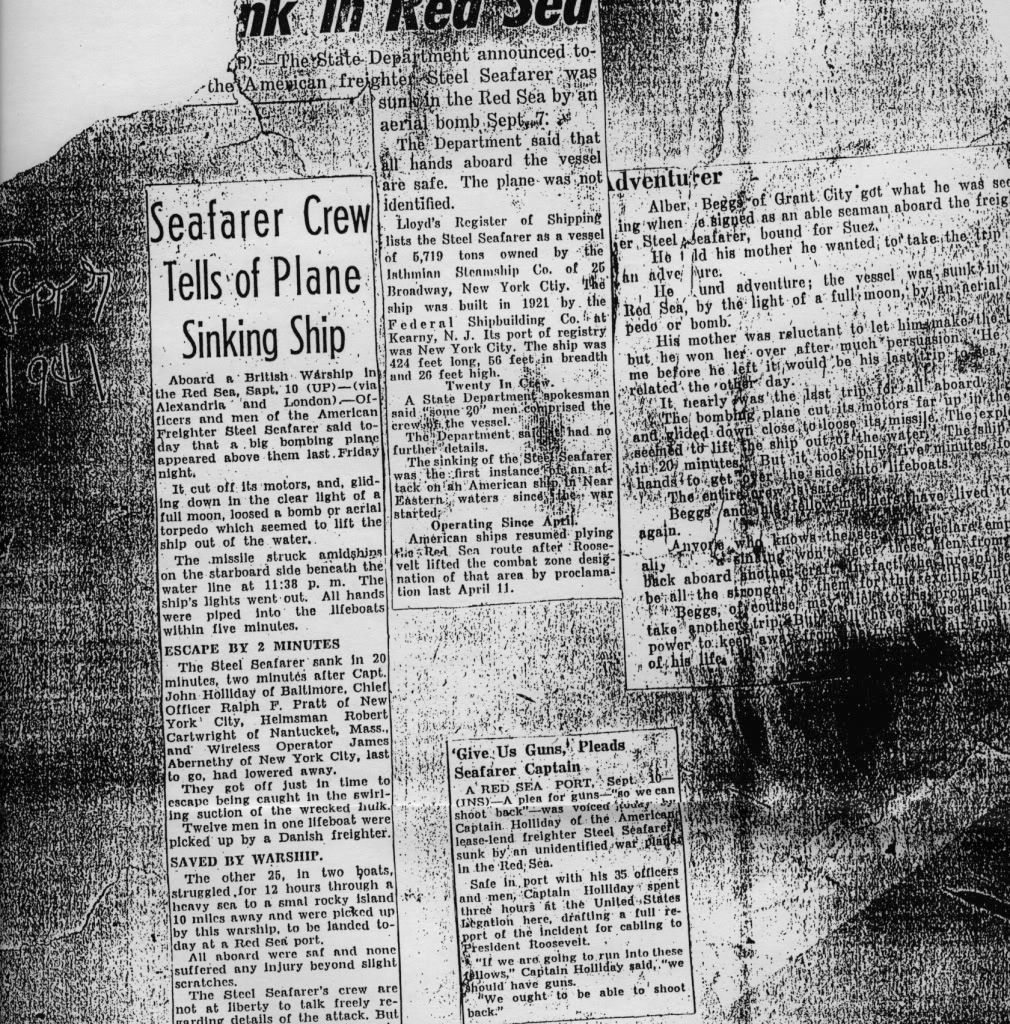
One of those mistakes was the Steel Seafarer - an American merchant vessel which was hit by a torpedo in the Red Sea and promptly sank. Presumably, a German warplane had mistaken it for a British freighter and attacked during the night watch. Fortunately, the crew escaped onto lifeboats and made it away from the ruined hulk, which slipped beneath the waves less than half an hour after the strike. Some were saved by a Danish freighter, but the majority reached the coast under heavy seas, and eventually made their way back across the desert to Cairo, and eventually, home.

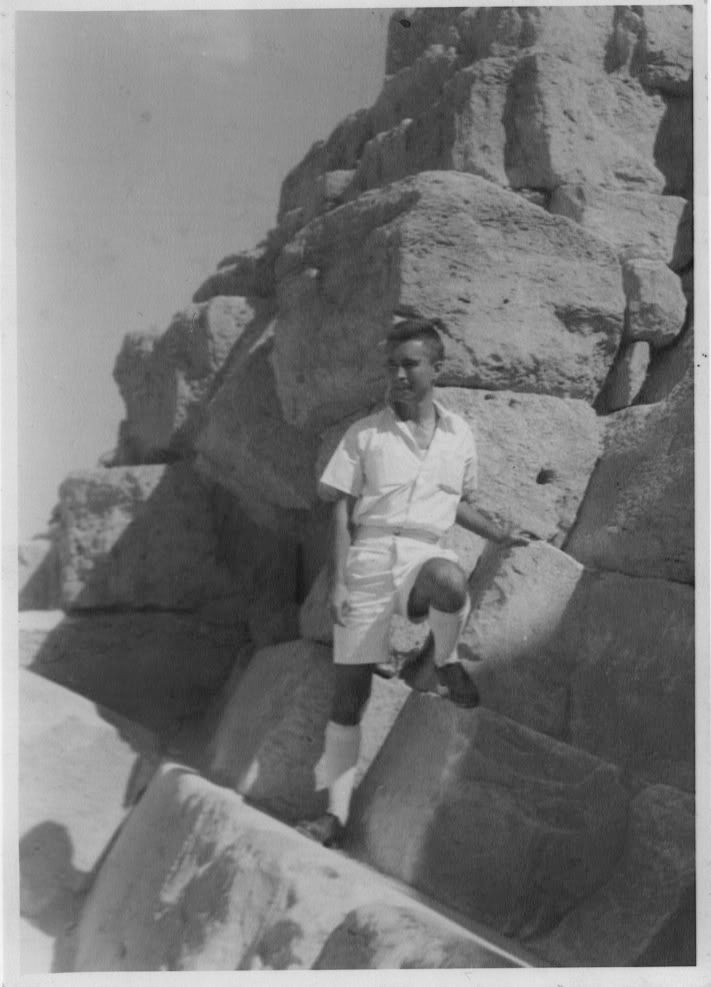
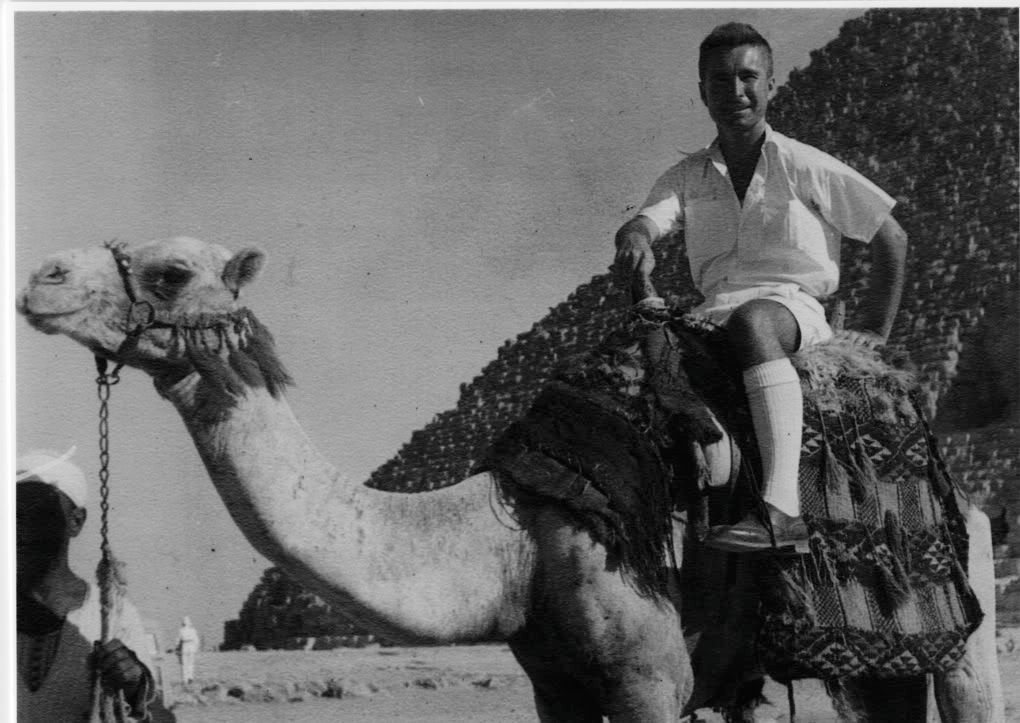
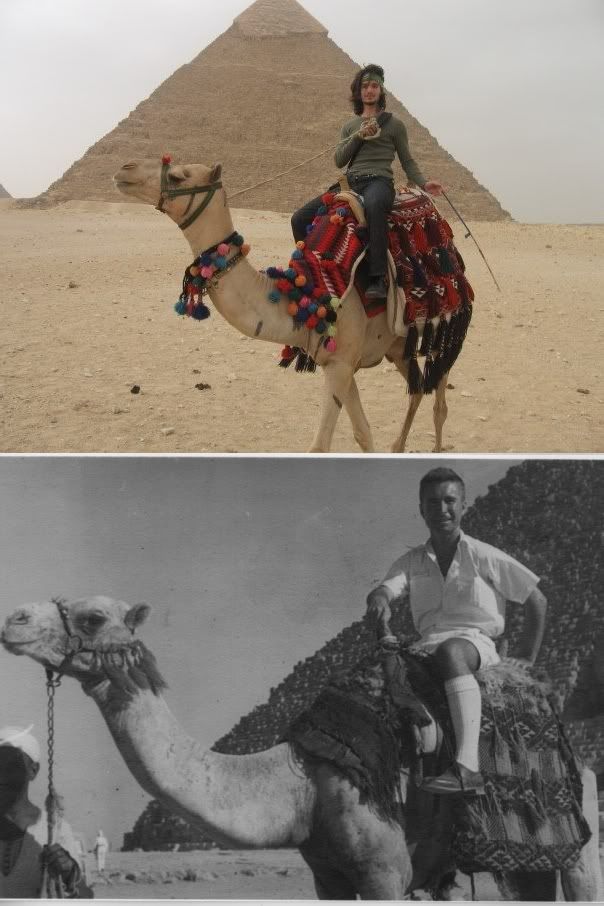
My grandfather was a member of the Merchant Marine aboard the Seafarer, and through some family connections, namely my half-aunt Marlene Beggs we've dug up a set of pictures from the incident, as well as clippings from newspapers that reported on it. I think they're pretty interesting, in all.

You can click the photos for bigger images

A photo of me juxtaposed with my grandfather, in nearly identical poses and settings.


Albert Beggs on the Pyramids.

News clippings describing the incident.

Grandfather Albert riding a camel.

Thursday, October 9, 2008

Triumphant Sun, Pt. 10

Evan awoke in near darkness, his disorientation almost complete. He stared at the crazed lines and cracks that cut his ceiling into broken shards of ancient plaster. Outside, the muezzin howled the morning prayer, echoing over the rumbling sounds of the city. As he finished another began, then another and another, tumbling over each other in a patchwork symphony of Quranic verses.

He fumbled at his bedside table for a glass of water, knocking his keys and watch to the floor with a metallic crash. A pervasive fatigue enveloped him as he levered himself to sit on the edge of his bed. The floor felt grainy beneath his bare feet so he shuffled his feet into a pair of beaten rubber slippers. The venetian blinds clattered back and forth in the slight breeze, sending erratic blades of light tumbling across the room, illuminating the dust that hung in the air.

Evan peered out the cramped kitchen window as he made coffee in the Arabic style, letting the powder-like grounds steep slowly in a small tin pot with sugar, cardamom and cinnamon. The window opened onto a peculiar shaft that ran the length of his building, supposedly bringing air to cramped interior rooms. Pipes and byzantine tangles of wiring snaked through it, covered in the sand and dust of forty or fifty years. It all hung together in an “Egyptian fix” – slapped together with whatever came to hand until it broke again, hopefully on someone else’s watch.

Evan closed the window shutter and walked to the balcony of the apartment, cradling the steaming glass of coffee in his hand. The first sip brought him awake and upright, the intensity of the dual flavors of coffee and sugar jolting him out of the morning stupor. He’d had no intention of waking so early, but sometimes he still found himself dragged from sleep by the calling of the muezzins. It was a sound at once ethereal and comfortingly familiar – on a trip across the Mediterranean a few months ago, he’d felt the lack of it every morning.

Minarets jutted out over the city like exclamation points – some mere crumbling towers of shoddy brick, others modern stone edifices and a few, selected examples of medieval Islamic architecture. Cairo earned the epitaph “City of a Thousand Minarets” several times over, but the effect became stranger and more affecting with odd, new juxtapositions. A new phenomenon outnumbered the spires – satellite dishes dotting every rooftop, sometimes clustering together like a growth, sprouting out of the fabric of the city. More popped up every day, tenuously wired and affixed to whatever surface provided a modicum of space.

Many of the buildings were unfinished, too – steel bars twisting up out of the concrete giving the roofs a vicious, unfinished appearance. Builders left them that way to dodge taxes – an incomplete building wouldn’t get taxed by the government. That never stopped squatters from moving out onto the exposed roofs, setting up rambling shanty-towns that collapsed upon themselves with depressing regularity. One of the thousands of forgotten, unimportant scandals that got lost in the wandering streets.

Wednesday, October 1, 2008

Triumphant Sun, Pt. 9

Samira realized that there might be more old mansions like her father's, crumbling slowly under the endless sun. So many of the old families had moved on, to new, fortress-like homes, or out of Egypt entirely. Some day in the far future, their residences might be the object of study, like the ruined temples of Karnak and Aswan. She imagined sand creeping in the shattered windows, while whole tribes of feral cats prowled the grounds. The trees might be slowly reduced to ash and swept away in the endless wind.

The poignancy of the idea saddened her – but she realized that in it lay a potential spark of creation. There might be a feature in the idea – a profile of the noble houses of Cairo, laid low by time and neglect. She could imagine her father’s rage and disapproval, and smiled. She did not remember him spending much time in the house itself, but his presence had lingered even when he left.

She particularly remembered the dressing table where he kept a small castle of decanters and bottles, a wooden humidor for cigars and various other trappings of Western decadence. No one touched it – not her mother, and not the servants, devout Muslims that they were.

Occasionally he would take it upon himself to clean the tray off, clouds of dust floating up from the crystal and glass in the afternoon sun. As a little girl she used to sneak up and lift the heavy tops to smell the exotic, alcoholic scents of the amber and ruby liquids glittering within. Later, once she was older, she used to sneak a nip or two, praying that he wouldn't notice the dusty fingerprints on the side.

A small cluster of students crossed the street towards her. She remembered that the American University dorms were only a few blocks away, and she began wandering towards them. One of the stray cats scrambled up onto the dividing wall and paced for a while above her head, threading through the overgrown wire before leaping down and scurrying off into the maze of streets.

She stopped across the road and watched for a while as students, some foreign but many Egyptian, filtered in and out through the glass doors. Though she had never attended, Samira had fond memories of lounging in the main quads and courtyards of the University; and other, more vibrant memories of a young Irishman on his semester abroad who had so assiduously courted her. His piercingly grey-green eyes stood out vividly in her memory, along with the crooked smile he would flash at her.

With a shake of her head, she tore away the cobwebs of years past and turned towards home. The sun had sunk low and the full weight of her fatigue began to press down on her. The students continued their boisterous laughter as she turned on her heel and headed away.

Wednesday, September 24, 2008

Triumphant Sun, Pt. 8

The garden had so overgrown the walls of the house that Samira could not discern whether anyone still occupied it. In truth, she could not decide if she really wanted to know. A perverse and contrary instinct pulled her to the place; now that she stood before it, regret suffused her. She let her hand fall down the gnarled iron of the gate.

As she stood, an elderly man shuffled down the street, each hand balancing a metal plate dotted with glasses of tea. He wore a long robe, the end spattered with dust and grime from the street, and his head was wrapped with a grey cloth. Deep lines carved his face, which crinked into a bemused smile when he saw her standing on the sidewalk, arm outstretched.

“Yaa basha,” she called, checking her shawl to make sure it was at a modest level around her head. “I have a question.”

“Yes, mademoiselle?” He said the French word with a rhetorical flourish; Samira felt he might have actually bowed had he not been burdened with the trays of tea.

“Who lives in this house, now?”

The man peered up at the house for a moment. “I think it is almost always empty. Sometimes there are cars, though. But I do not know who it has been in many years – not since Khaleel Rahman left.”

Samira's breath caught in her throat. “You know Khaleel Rahman?”

The man drew himself up with a dilapidated pride. “I was bawab here for 10 years.” His expression fell slightly. “But then, I joined the army.”

She tried to piece together a memory of this wizened man but could not. In her memory, the bawab had been a heavy-set, insouciant man with a deep voice and a barrel chest. No matter how many years had passed, she could not see him transformed into this diminutive figure.

“When was this?”

The man thought for a while, blinking rheumy grey eyes. “Maybe 25, 30 years ago I left? But I remember. Rahman was a great man.”

The hell he was, though Samira to herself. “Shukran, basha,” she replied out loud and inclined her head. He hefted the trays and continued down the street at the same slow, steady pace, slippered feet falling on the uneven pavement with rhythmic slaps.

Saturday, September 20, 2008

Triumphant Sun, Pt. 7

If Fuad benefited from the war, he had to be getting help from the Americans. With US troops in Afghanistan, Iraq and the Gulf, he could use a supply chain that stretched all the way across the Middle East, bypassing Afghan smugglers and Turkish drug runners. The Afghan would be able to cut costs and take advantage of military security. If he could find proof that Abdel-Kareem was mixed up with the operation, it would come together.

For a while, he stared out the tinted windows of the sedan. The city seemed impossibly remote from him, not truly there but merely projected onto the side of the car. His mind was far away, trying to trace the patterns, spiralling out from the Afghan highlands like a woven carpet. Which Americans were involved? He vaguely remembered a story about American drug runners using the coffins of slain soldiers. That didn't seem the likeliest scenario, though.

If Abdel-Kareem was involved, that meant the military would also be involved. Every year, millions of dollars in military aid flowed from the United States to Egypt. Some of that could easily be diverted to running drugs out of the remoter areas of occupied Afghanistan. Fuad wouldn't talk, obviously, but someone else in the chain might. He absentmindedly took the finger-length brick of hash and secreted it away in a pocket.

“So you do opium and guns too, Fuad?” he asked. “Maybe I need something else, I come back to you?”

Fuad gave him a searching look. “Maybe so. But guns, never. Too much risk, too little money. But for now, we have a deal?”

Evan nodded. He would have killed to have his pocket recorder with him right now. He wasn't sure yet what the significance of Fuad avoiding weapons was, but he knew it had to be there. Mentally, he filed it away for future use.

He produced a wad of a battered Egyptian pounds and thumbed through them for the least frayed bills. Money in Cairo circulated endlessly, the cheap paper steadily disintegrating further and further. More than once, Evan's payments had been rebuffed by clerks disdainful of the wretched state of his currency. He handed over the money and Fuad signalled for the driver to pull over. The car rolled to a halt before the front gate of the Nile Hilton under the bored, impassive gazes of the guards.

“This place is good for you?” asked Fuad.

“It's as good as any.”

“Ma'salaam,,” said the Afghan in a firmly dismissive tone. Obviously he didn't much trust Evan.

“Ma'salaam,” replied Evan as he stepped from the car. In front of the armed soldiers, the hashish felt heavy in his pocket. Fuad's driver pulled away from the curb in a cloud of dust and Evan looked after it as it faded into the snarls of traffic, a shimmering mirage of heat hanging over the square.

Thursday, September 18, 2008

Staying the Course

Sorry - I'm running a bit behind because I just started a new job this morning and I have a big writing project to wrap for the other one. I don't want to to rush the next installment because it's going to be important to the plot and I want it to make sense. Anyways, it should be up by the end of the week and then we'll be back on schedule.

Also, my tracker widget tells me I got a spike of viewers yesterday, which I can only attribute to the McCain post. I'm glad you enjoyed it. Tell your friends! Also, read the story. 'Cause that's why I'm here.

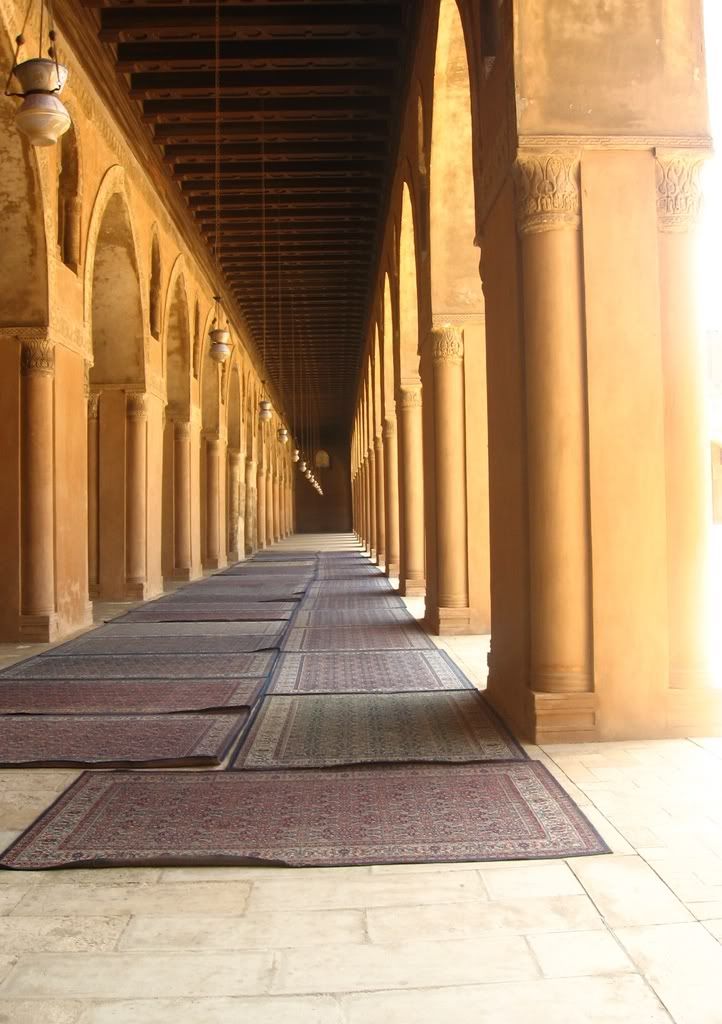
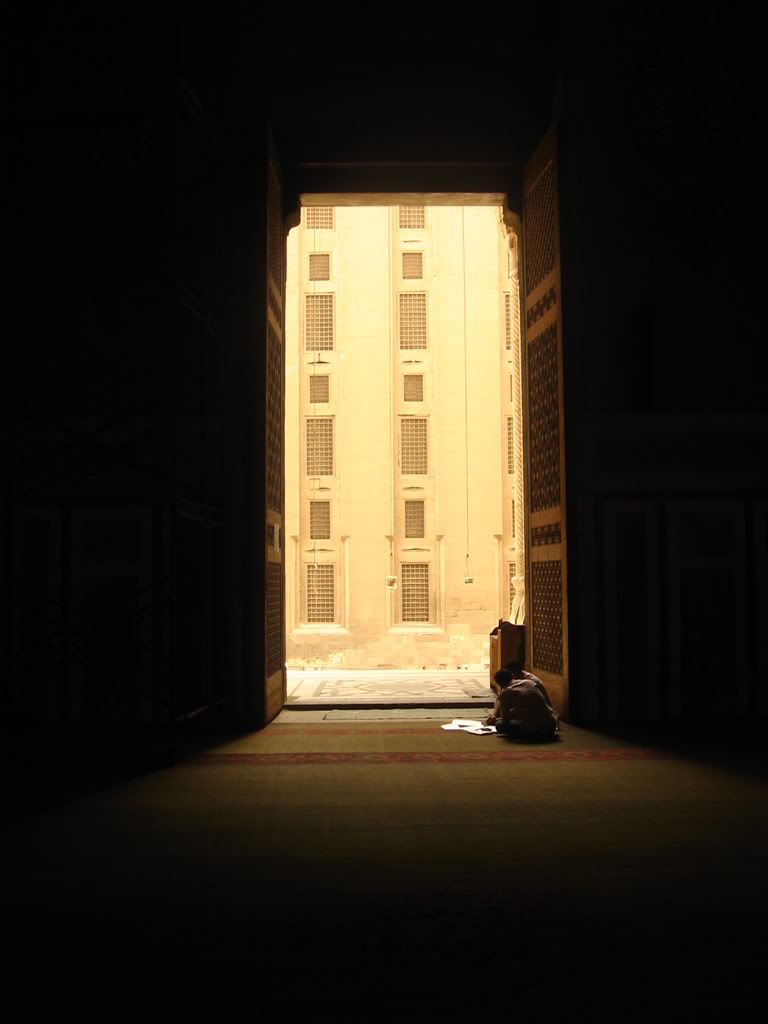
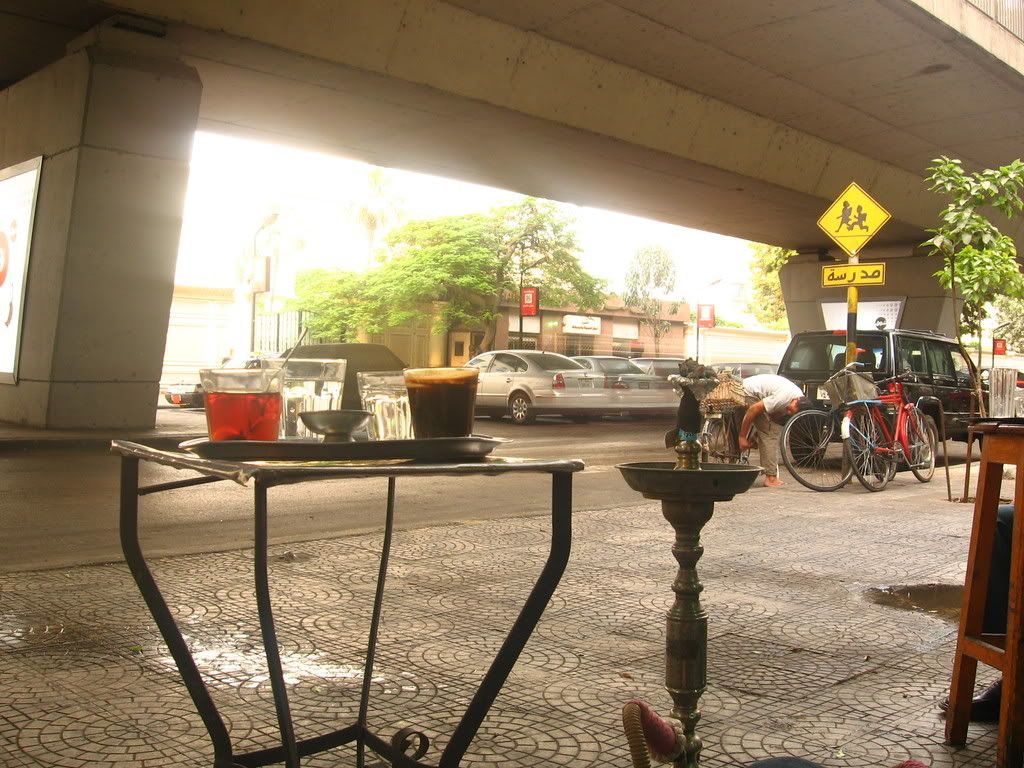
Consolation prize - some pictures of Cairo, to get you in the mood.

Tuesday, September 16, 2008

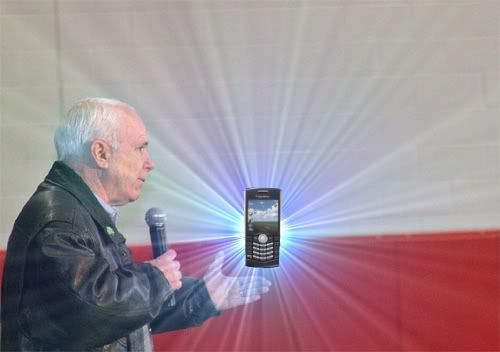
John McCain Created the Blackberry


Although Al Gore may have created the internet, John McCain has done him one better by Creating the Blackberry.